The confusion around plant-based eating — and what the research actually shows
The confusion around plant-based eating — and what the research actually shows
A major study of over 63,000 people revealed something important: not all plant-based diets are protective. The difference between a health-promoting and a health-harming plant diet may surprise you..
By: Jonathan Glass M.AC
Many of you know I am vegetarian. I am a genuine proponent of a no or low animal food diet — and have been for many years, both personally and in my clinical practice.
But the following information is critically important for anyone eating a strictly plant-based diet, or for those simply trying to eat more plant-based. Because the distinction I'm about to share could make the difference between genuinely supporting your health and unknowingly undermining it.
PUBLISHED RESEARCH · THE LANCET REGIONAL HEALTH – EUROPE
A major study that changes the conversation
A landmark study published in The Lancet Regional Health – Europe followed over 63,000 people for more than 9 years. Its findings were striking — and need to be clearly understood by anyone eating or considering a plant-based diet.
Not all plant-based diets are protective
This is the central finding — and it challenges a widespread assumption in both mainstream health culture and the wellness world.
+40% Increased cardiovascular risk
Ultra-processed plant-based diets built on refined oils and packaged foods
−40% Reduced cardiovascular risk
Whole, minimally processed plant food diets
This is a profound difference — a full 80-point spread between two diets that both carry the label "plant-based." And it reflects something deeper than nutrition alone.
"The body does not respond to labels. It responds to quality, structure, and the life force within what we consume."
How "plant-based" became a marketing term
Plant-based" has become a marketing term — and the food industry has been very effective at capitalizing on its health halo. But a packaged vegan product, a highly processed burger made from isolated plant proteins, a sweetened plant milk loaded with additives, or a processed grain-based snack does not carry the same biological intelligence as a whole vegetable, legume, or fruit in its natural state.
Processing fundamentally changes food. And not in ways that serve us.
WHAT PROCESSING STRIPS FROM PLANT FOODS
Fiber — the structural matrix that feeds the microbiome, slows glucose absorption, and supports cardiovascular health
Fats are altered — especially with commonly used seed oils, which are extracted under high heat and pressure in ways that damage their chemical structure
Vital nutrients are diminished — vitamins, minerals, and phytonutrients that exist in their intact, bioavailable forms only in whole foods
Foreign substances are introduced — additives, emulsifiers, and preservatives that can disturb the microbiome, increase inflammation, and compromise the integrity of the gut and cardiovascular system
How "plant-based" became a marketing term
"Plant-based" has become a marketing term — and the food industry has been very effective at capitalizing on its health halo. But a packaged vegan product, a highly processed burger made from isolated plant proteins, a sweetened plant milk loaded with additives, or a processed grain-based snack does not carry the same biological intelligence as a whole vegetable, legume, or fruit in its natural state.
Processing fundamentally changes food. And not in ways that serve us.
So while many people are genuinely moving in a positive direction by reducing animal products, they may unknowingly be significantly increasing their inflammatory burden in another way — through the processed foods filling that gap.
The bigger picture: accumulated burden
This is where the conversation needs to expand.
We are not only navigating food choices, but a broader accumulation of toxins — environmental, chemical, and internal. Over time, this creates an inflammatory burden in the system where even genuinely good inputs cannot fully express their healing potential.
The liver is working harder. The microbiome is under pressure. The cellular environment is increasingly burdened. And in that state, even a bowl of whole grains and vegetables can't deliver what it's capable of delivering.
"True nourishment is not just about what we eat. It is about what we are able to receive, process, and assimilate."
What this means if you're eating plant-based
If you are eating plant-based, or moving in that direction — as I believe many of us should be — this distinction is essential:
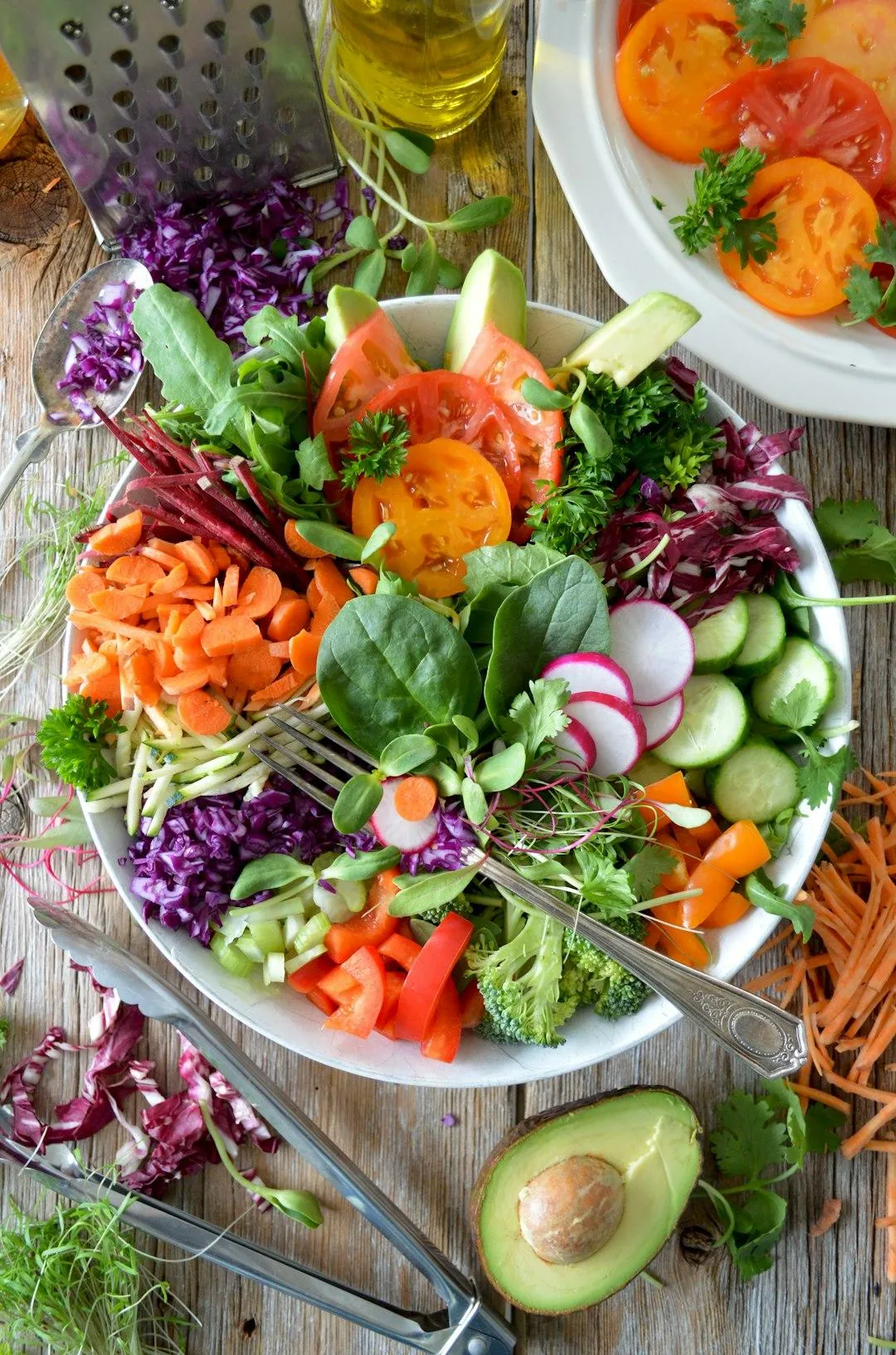
Whole, living foods support life. Legumes, vegetables, whole grains in their intact forms, fruits, nuts, and seeds — these carry the structural complexity, fiber, and living intelligence that the body recognizes and can use.
Processed foods, even when labeled as healthy or plant-based, often do not. The label is not the food. The package is not the nutrition. What matters is the structure, integrity, and quality of what reaches your cells.
This is one of the reasons we created the Total Life Cleanse
The TLC is not simply a dietary program. It is a guided process to help the body release accumulated burden — physically, mentally, and energetically — so that clarity, balance, and vitality can return naturally.
When we clear the system, good food becomes more powerful. Nutrients are absorbed more fully. The body can do what it was designed to do.
More to come on this. This is a conversation worth having deeply.
Whole, living foods support life. Legumes, vegetables, whole grains in their intact forms, fruits, nuts, and seeds — these carry the structural complexity, fiber, and living intelligence that the body recognizes and can use.
Processed foods, even when labeled as healthy or plant-based, often do not. The label is not the food. The package is not the nutrition. What matters is the structure, integrity, and quality of what reaches your cells.
Ready to clear the burden and let good food do its work?
The Total Life Cleanse program is designed to help your body release what's accumulated — so that the whole foods you're eating can truly nourish you.